
Infected Mole? Signs It's Serious, What's Safe to Do, and When to See a Doctor
Worried about a mole that has turned red, sore, or started leaking pus? Here is how to tell a simple infection from a warning sign, what is safe at home, and when to see a doctor.
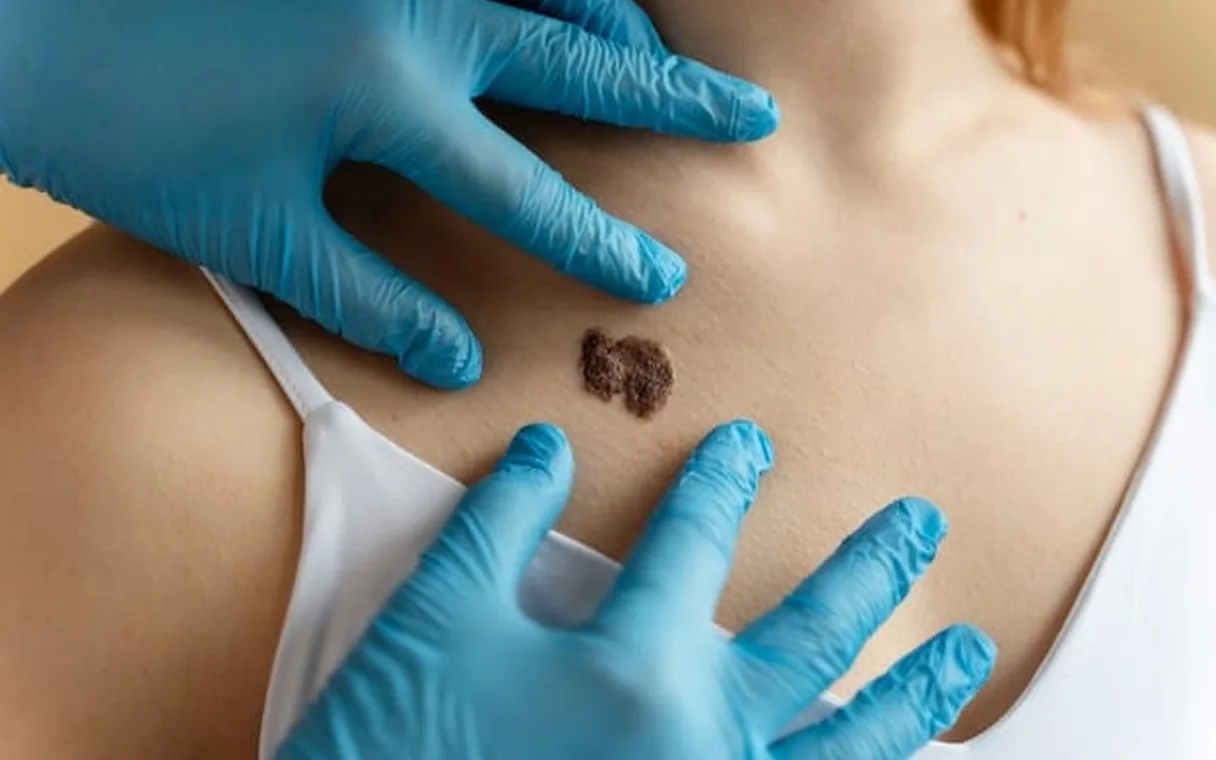
Yes, a mole can get infected. A mole that becomes red, sore, swollen, warm, or starts leaking pus usually has a treatable skin infection around it, not skin cancer. But a few warning signs do need a doctor quickly, so it helps to know which is which before you decide what to do next.
An infection in the skin around a mole is not the same thing as a mole becoming cancerous. The two are assessed differently, and infection is the more common and more treatable of the two. Source: American Academy of Dermatology. [1]
- A mole that is red, swollen, warm, or leaking pus most often has a local skin infection, which is treatable.
- Infection is not the same as a mole turning cancerous. The two look and behave differently.
- Never cut, burn, or use home remedies on a mole. This can hide warning signs and cause scarring.
- See a doctor the same day if there is spreading redness, fever, a fast-growing lump, or heavy bleeding.
- A mole that is changing in colour, border, or size needs an in-person assessment even without infection.
Can a mole actually get infected?
Yes, a mole can get infected, most often when the skin over or around it is broken. Shaving nicks, scratching, picking, friction from clothing, or an ingrown hair near the mole can let everyday skin bacteria in. The result is a local infection in the skin, which is common and usually settles with the right care.
The mole itself is not the infection. The infection sits in the skin around it, the same way any small cut or bump can become infected. That is why an infected mole is usually a skin problem to treat, not a mole to panic about [4].
What are the signs a mole is infected?
An infected mole usually shows the classic signs of a skin infection: redness around the mole, tenderness or pain, swelling, warmth, and sometimes a yellow crust or pus. It may feel sore when touched or rubbed by clothing. These signs come on over days, not months.
Local signs to look for:
- Redness or a pink halo in the skin around the mole
- Tenderness, soreness, or throbbing
- Swelling or a raised, firm feeling
- Warmth over the area
- Yellow crust, weeping, or pus
Signs the infection may be spreading, which need urgent care:
- Redness that is spreading outward or streaking away from the mole
- Increasing pain out of proportion to the mole
- Fever, chills, or feeling generally unwell
- A firm, growing, painful lump under the skin
According to the NHS, spreading redness, warmth, and feeling unwell can point to cellulitis, a deeper skin infection that needs prompt medical treatment. [2]
Is it an infected mole or a changing mole?
This is the distinction that matters most. An infected mole tends to be sore, warm, and red for days, then settles with care. A changing mole is usually painless and shifts slowly over weeks or months in its colour, border, or size.
Put simply, infection is about how the skin feels now, and change is about how the mole looks over time.
The table below is a simple way to tell them apart. [5] If your mole fits the right-hand column, book an in-person assessment even if there is no pain or pus. You can also read more about safe removal options for black moles on the face.
| Feature | More like infection | More like a changing mole (get it assessed) |
|---|---|---|
| Onset | Over days | Slowly, over weeks or months |
| Pain | Often sore or tender | Usually painless |
| Warmth or pus | Common | Absent |
| Colour | Red skin around it | New colours inside the mole itself |
| Border and shape | Unchanged | Uneven, blurred, or growing |
| What it responds to | Settles with wound care or antibiotics | Needs a doctor's assessment, not home care |
The ABCDE warning signs of a suspicious mole
Doctors use a simple checklist, the ABCDEs, to flag moles that need a closer look. It is worth knowing because these signs are painless and easy to miss. If a mole shows any of them, have it assessed in person.
- A, Asymmetry: one half does not match the other
- B, Border: edges are ragged, notched, or blurred
- C, Colour: more than one colour, or an uneven mix
- D, Diameter: larger than about 6mm, roughly a pencil eraser
- E, Evolving: any change in size, shape, colour, or a new symptom such as itching or bleeding
The Skin Cancer Foundation notes that the "E" for evolving is one of the most important, because any mole that is changing deserves a professional check, whatever its size. [3]
What should you do at home for an infected mole?
Safe home care is gentle and simple: keep the area clean and dry, and leave the mole alone. Wash it gently with mild soap and water, pat it dry, and avoid picking, squeezing, or covering it in strong creams. Most mild irritation eases within a few days when you stop disturbing it.
Gentle steps that are safe:
- Clean the area gently with mild soap and water
- Pat dry and keep it uncovered when possible
- Avoid tight clothing or repeated rubbing over the mole
- Stop shaving directly over it until it settles
What to avoid completely: do not squeeze or pop it, do not scratch or pick, and do not apply harsh home remedies to a mole. Similar gentle-care and professional-assessment rules apply to related skin lesions, including wart removal with laser and milia removal.
Why home mole-removal kits and remedies are not safe
Home mole-removal kits, acids, and remedies such as apple cider vinegar are not a safe way to deal with a mole, infected or not. They can burn the skin, cause scarring and infection, and, most seriously, destroy the tissue a doctor needs to examine. If a mole is ever removed, it should be assessed first so nothing important is missed.
Do not try to remove a mole yourself. Cutting, burning, or dissolving a mole at home can hide the very warning signs a doctor looks for. Any mole that needs removing should be seen by a physician first.
How is an infected mole treated by a doctor?
Treatment is usually straightforward. A doctor first treats the infection, often with good wound care and, when needed, a course of antibiotics for a bacterial skin infection. Once the area has calmed, the mole itself is examined properly to make sure it looks and behaves normally.
Most infected moles settle with this two-step approach and need nothing more. If the mole also looks unusual, or if it keeps getting irritated because of where it sits, a doctor can discuss whether assessment and removal are appropriate.
If removal is ever discussed, this guide to what mole-removal treatment costs and involves explains what to expect. At the clinic, surgical mole removal starts at Rs 5,000 per mole, and any removed tissue is sent for histopathology when there is a clinical reason, always in a personal consultation after the infection is under control.
How urgent is it? A quick traffic-light guide
How urgent an infected mole is comes down to three things: whether the redness is spreading, whether you feel unwell in yourself, and whether the mole itself is changing. The traffic-light guide below sorts the common signs into watch, book, and urgent, so you can decide your next step in seconds.
This is a general aid, not a diagnosis, and it does not replace being seen. When you are unsure, always choose the safer, higher option.
| Signal | What you are seeing | What to do |
|---|---|---|
| 🟢 Green | Mildly red or irritated, no pus, no pain, no change in the mole | Keep it clean and dry, stop disturbing it, watch for a few days |
| 🟡 Amber | Sore, swollen, warm, some pus, or a mole that is slowly changing | Book a doctor's assessment in the next few days |
| 🔴 Red | Spreading redness, fever, fast-growing painful lump, heavy or repeated bleeding | Seek same-day medical care |
When should you see a doctor urgently?
Seek same-day medical care if the redness is spreading, if you have a fever or feel unwell, if a painful lump is growing quickly, or if the mole is bleeding heavily or repeatedly. These can be signs of a deeper infection or another problem that should not wait. When in doubt, it is always safer to be seen.
You should also book an in-person assessment, though not as an emergency, for any mole that is changing in colour, border, or size, that itches or bleeds a little, or that simply looks different from your others. These changes are usually painless, which is exactly why a professional check matters.
If you are in Rawalpindi or Islamabad and would like a mole assessed, you can send a photo and a short description on WhatsApp to +92 330 936 8682, and Dr Taskeen will advise whether an in-person visit is needed. This is a first step for reassurance, not a diagnosis over text.
Sources and references
- American Academy of Dermatology, "Moles: Overview". aad.org
- NHS, "Cellulitis". nhs.uk
- Skin Cancer Foundation, "Melanoma Warning Signs". skincancer.org
- MedlinePlus (U.S. National Library of Medicine), "Moles". medlineplus.gov
- DermNet, "Melanocytic naevus". dermnetnz.org
Common questions, answered by the doctor
Yes. A mole can get infected when the skin over or around it is broken by shaving, scratching, picking, or friction. This lets everyday bacteria in and causes a local skin infection, which is common and usually treatable.
Usually not. Infection is a skin problem around the mole and is different from a mole becoming cancerous. However, any mole that is also changing in colour, shape, or size should be assessed in person to be safe.
Pus usually means a bacterial skin infection in or around the mole, often after it was scratched, picked, or nicked. Keep the area clean, do not squeeze it, and see a doctor if there is pus with spreading redness, pain, or fever.
You can keep the area gently clean and dry and stop disturbing it, which settles many mild cases. You should not squeeze, pick, or use home removal kits or remedies on a mole. See a doctor if it is not improving or is getting worse.
A doctor treats the infection first, with wound care and antibiotics when needed, then examines the mole once it has calmed. Most cases settle with this approach. Removal, if ever needed, is discussed in person after the infection clears.
Treat it as urgent if redness is spreading, you have a fever, a painful lump is growing quickly, or the mole is bleeding heavily. These need same-day care. When you are unsure, choose to be seen.
Speak to Dr Taskeen Iqbal
Message the clinic with your concern and a photo if you have one. Dr Taskeen Iqbal will tell you whether you need to come in, and what the right next step is.