
PRP hair treatment in Islamabad, regrowth from within
PRP uses your own platelet-rich plasma to stimulate the hair follicles and support natural regrowth, slowing shedding and improving density. Because it comes from your own blood, there is no risk of rejection. Every treatment is performed personally by Dr Taskeen Iqbal, a PMDC-registered Skin and Aesthetic Physician in Bahria Town, Rawalpindi.
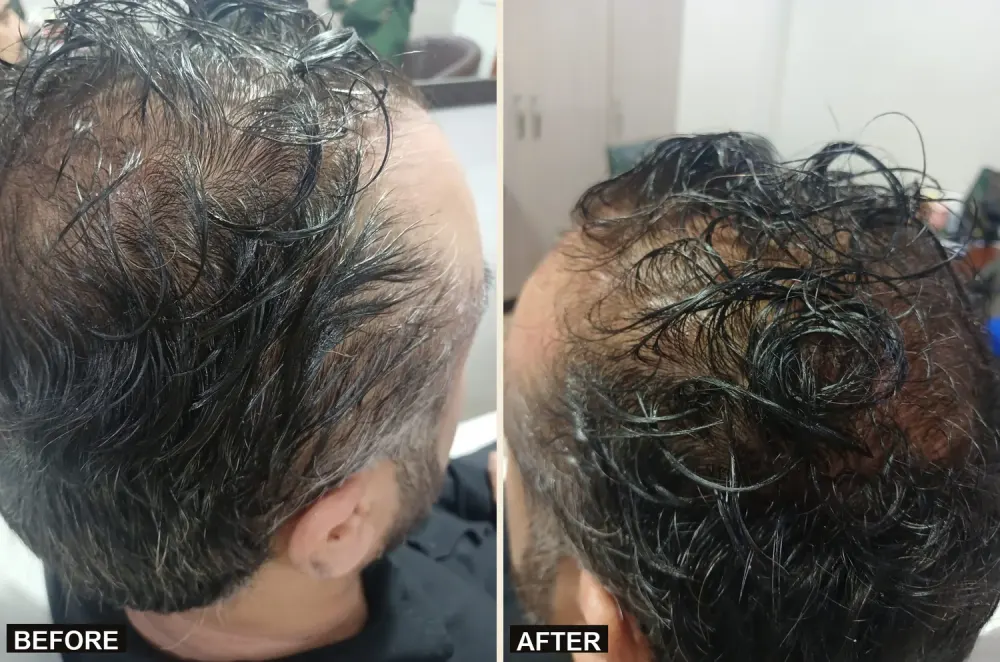
PRP hair treatment uses a concentrated preparation of your own platelets to stimulate the hair follicles, slow shedding and support natural regrowth. A small blood sample is drawn, spun in a centrifuge to isolate the growth-factor-rich plasma, then injected into the scalp where thinning has begun.
Because the plasma comes from your own blood, there is no risk of rejection, and no allergy to the plasma itself. The growth factors signal the follicles to move into a healthier growth phase and improve the blood supply that nourishes them.
01 Who PRP hair treatment works for
PRP hair treatment has a strong evidence base and produces meaningful results for the right candidates. Patients with early to moderate androgenetic alopecia, female pattern hair loss, telogen effluvium or post-pregnancy shedding consistently show improved density and reduced shedding after a properly structured course.
Results are most significant in patients who start while their follicles are still active. The earlier treatment begins, the broader the range of follicles that can be rescued and stimulated. You will get an honest assessment of what is realistic for your specific stage and type of hair loss. Individual results vary.
PRP is not recommended if you have an active scalp infection, certain blood disorders, are taking high-dose blood thinners, are undergoing active cancer treatment, or are pregnant. Your full medical history is reviewed in consultation before any treatment begins.
02 What to expect during treatment
- Consultation. Your scalp and hair-loss pattern are assessed, and PRP is confirmed as the right approach before anything begins.
- Blood draw. A small sample is taken from your arm under sterile conditions.
- Preparation. The sample is spun in a centrifuge to isolate the growth-factor-rich plasma.
- Application. The plasma is injected into the scalp at the thinning areas, with a topical anaesthetic for comfort.
- Healing and growth. The follicles are stimulated over the following weeks and months, with density building gradually across the course.
03 Aftercare for the best results
- Avoid washing the scalp for the first 24 hours
- Avoid harsh hair products, direct sun and heavy sweating for a day or two
- Stay well hydrated and avoid alcohol for 48 hours
- Attend follow-up sessions, since results build over a structured course
Any tenderness settles quickly. You receive written aftercare instructions before you leave, and the clinic stays reachable on WhatsApp if questions come up.
04 Why patients choose Dr Taskeen Iqbal
Dr Taskeen Iqbal is a Skin and Aesthetic Physician who performs every treatment at the clinic herself, with postgraduate training in aesthetic medicine. Her registrations and qualifications are set out in full here.
Every PRP hair treatment follows established medical protocols with strict infection control and an individualised approach to each patient's hair-loss pattern. Where PRP is not the right answer, you will be told so honestly.
05 What determines the cost of PRP hair treatment
PRP is quoted per course rather than per injection, because a single session is rarely the whole treatment. Four things move the figure:
- How many sessions your case needs. A typical starting course is four to six sessions about four weeks apart, then maintenance. Advanced loss needs more, and sometimes PRP is not the right answer at all.
- The area being treated, since a receding hairline and a whole thinning crown are not the same amount of work.
- Whether PRP is combined with anything else, such as microneedling or scalp mesotherapy in the same visit.
- Maintenance, which is usually a single session every few months once the course is finished, not a repeat of the full course.
Your exact quote is confirmed in consultation, once the cause of the problem and the number of sessions you actually need are clear. If cost is the deciding factor it is worth knowing that PRP sits well below exosome therapy, and that being told honestly you are not a good candidate saves you the whole course.
Side effects and who should not have PRP
Common, temporary side effects
- Tenderness or soreness at the injection sites for a day or two
- Mild swelling and redness on the treated area
- Small bruises where the needle entered
- A mild headache after a scalp session
- A short phase of increased shedding in the first weeks, which settles
Rare, more serious effects
- Infection at an injection site
- Injury to a blood vessel or nerve
- No meaningful response to treatment
Who should not have PRP
PRP uses your own blood, so an allergic reaction to the injected material is very unlikely. The caution is about your blood itself and the state of the skin being treated. PRP is not suitable if you have a platelet or bleeding disorder, an active infection or active acne over the treatment area, or are taking anticoagulant medication. It is generally deferred during pregnancy and breastfeeding, and in active cancer. Tell the doctor about every medication and supplement you take, including aspirin and anti-inflammatories, because several of them affect platelet function.
Evidence for PRP in hair loss is encouraging but not uniform. Systematic review work reports improvement in androgenetic alopecia broadly comparable to topical minoxidil, while noting that preparation methods vary between clinics and that more standardised trials are still needed [1]. You should expect an honest assessment of whether PRP is likely to help your case, including when it is not.
This page is general information, not a substitute for a medical consultation. PRP is a medical procedure; individual results and suitability vary and are assessed in person.
PRP hair treatment, frequently asked
A topical anaesthetic is used, and most patients describe only mild discomfort during the scalp injections. The session is short and well tolerated.
PRP hair treatment works as a structured course, usually a few weeks apart, followed by periodic maintenance. The exact plan is set in consultation based on your hair-loss pattern.
Reduced shedding often comes first, with improved density building over several months. Results are most significant when treatment begins while follicles are still active. Individual results vary.
Patients with early to moderate androgenetic alopecia, female pattern hair loss, telogen effluvium or post-pregnancy shedding tend to respond well. The earlier treatment begins, the broader the range of follicles that can be rescued.
Yes. Because it uses your own blood, there is no risk of rejection, and no allergy to the plasma itself. Every treatment follows established medical protocols with strict infection control, and your history is reviewed first.
PRP is less effective once follicles are fully lost. It works best on active follicles, so earlier treatment gives the best chance. Dr Taskeen Iqbal will be honest about what is realistic for your stage of hair loss.
Message the clinic on WhatsApp at +92 330 936 8682 or tap any book button on this page to arrange a consultation at the Bahria Town clinic.
Noticing thinning or shedding?
Book a consultation with Dr Taskeen Iqbal. The earlier hair loss is treated, the more follicles can be supported, and you will get an honest plan built around your hair.