
Thread Lift Before and After: How Long PDO Results Really Last
A PDO thread lift can lift mild sagging without surgery, but the honest question is how long the result really holds. Here is the realistic before-and-after timeline from day zero to twelve months, what it costs, who it suits, and where the evidence is mixed.
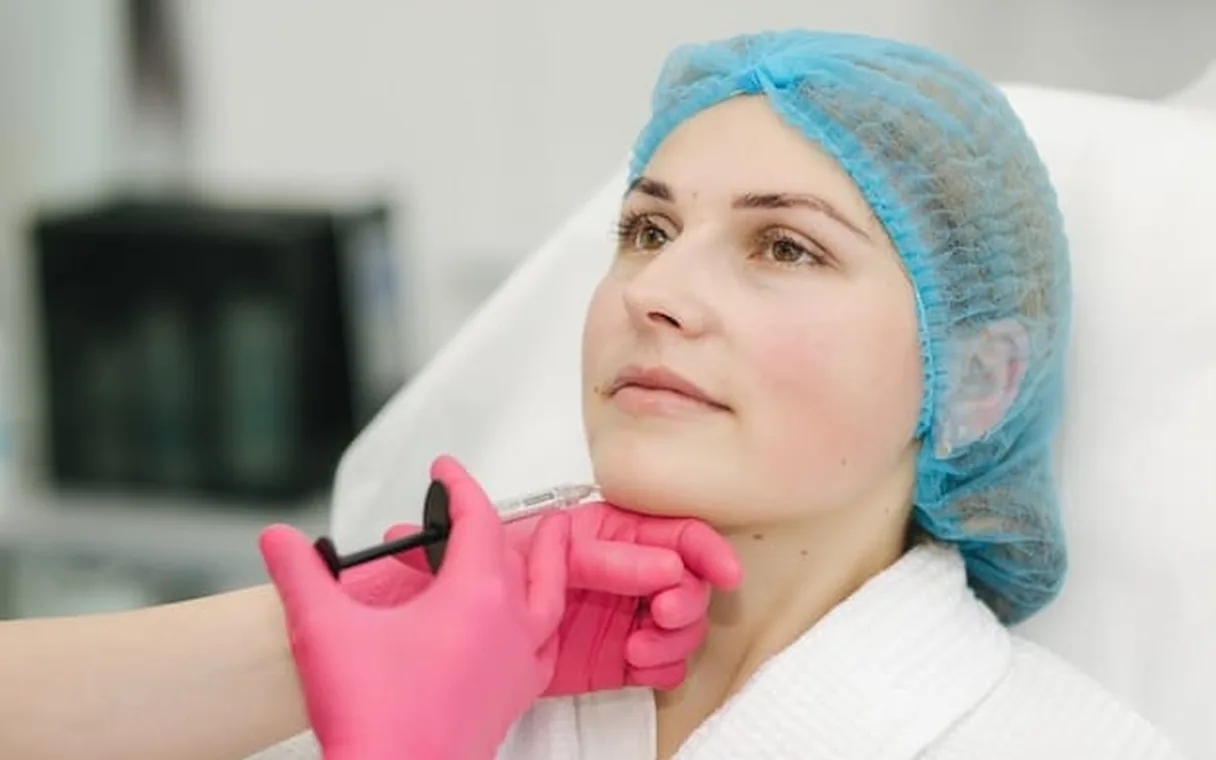
- A PDO thread lift gives an immediate mechanical lift, then stimulates your own collagen over the following months.
- The threads themselves dissolve within about six to eight months; the collagen they trigger is what carries the result.
- Most patients are quoted twelve to eighteen months, but the evidence on longevity is mixed, and the visible lift is strongest at three to six months.
- It suits mild to moderate sagging, not severe laxity, which still needs surgery. Individual results vary.
Patients in their late thirties through fifties often notice the same thing: cheeks sitting lower, jowls forming along the jaw, a softer chin and jawline than a few years ago. They are not ready for a surgical facelift but want more than creams can give. For many of them a PDO thread lift is the answer, and the most common question they ask is the honest one in the title, how long does it really last.
This is the realistic before-and-after timeline I walk my own patients through, from the day of treatment to twelve months later.
A PDO thread lift works in two ways: the threads give an immediate mechanical lift, and as they slowly dissolve they trigger new collagen, called neocollagenesis, around the thread sites. That collagen response is what extends the result beyond the life of the threads themselves. Source: peer-reviewed study on PDO thread facial rejuvenation, National Library of Medicine.
What does a PDO thread lift actually do?
PDO stands for polydioxanone, a dissolvable suture material used in surgery for decades. Fine PDO threads, sometimes with tiny barbs along them, are placed under the skin to lift sagging tissue and stimulate collagen at the same time. The immediate effect is mechanical, the threads physically holding tissue higher; the slower effect is the new collagen your body lays down around them [1]. That combination is why a well-placed thread lift keeps working for months after the threads have gone.
What does the before-and-after timeline look like?
The result you see changes week by week. The earliest photos, taken right after treatment, are the least flattering because of swelling. The honest comparison starts at the two-week mark and peaks months later.
| Stage | What most patients see |
|---|---|
| Day 0 (immediately) | Visible lift, plus swelling, mild bruising, tiny entry marks |
| Days 1 to 7 | Swelling and a tight, pulling feeling settle with strict aftercare |
| Weeks 2 to 4 | The first true result: lifted cheeks, sharper jawline, reduced jowls |
| Months 1 to 3 | Lift stable, skin texture and firmness improving |
| Months 3 to 6 | Peak result, best firmness and definition |
| Months 6 to 12 | Threads dissolve, collagen holds, lift gradually eases |
How long does a thread lift really last?
Most clinics, including ours, quote twelve to eighteen months, and many patients do experience that. But it is fair to say the evidence on longevity is mixed: one review of barbed-suture lifts found the initial lift had largely faded by twelve months as the threads dissolved [2]. The visible mechanical lift is genuinely strongest at three to six months, after which it eases gradually while the collagen improvement to skin quality tends to last longer. Setting that expectation up front is part of an honest result, not a sales pitch.
The lift you see at three months is not the lift you keep at twelve. The threads do the early work, your own collagen does the lasting work, and managing that expectation is half of a good result.
Dr Taskeen Iqbal, Aesthetic Physician
How much does a thread lift cost in Pakistan?
Pricing depends on how many areas are treated and how many threads are needed. These are the ranges at the clinic.
| Treatment area | Price range (PKR) |
|---|---|
| Mid face only | Rs 40,000 to 80,000 |
| Lower face and jowls | Rs 50,000 to 100,000 |
| Full face lift | Rs 80,000 to 180,000 |
| Neck thread lift | Rs 40,000 to 80,000 |
| Eyebrow lift | Rs 30,000 to 60,000 |
| Combined face and neck | Rs 120,000 to 250,000 |
Many patients pair a thread lift with a little Botox or a PRP facial for skin quality, and the right plan is decided at consultation rather than sold as a package.
Who suits a thread lift, and who needs surgery?
A thread lift is most effective for mild to moderate sagging, the cheeks, jowls, jawline, brow, and loose neck skin. It is not a substitute for a surgical facelift, and for severe skin laxity or significant volume loss the better options are surgery or fillers. Dermatology guidance is clear that the right skin-tightening choice depends on how much laxity there is [4]. The areas a thread lift treats well include:
- Sagging cheeks and midface
- Jowls and a softening jawline
- Loose skin under the chin and mild neck laxity
- Drooping brows and marionette lines
If your main concern is a heavier double chin rather than skin laxity, fat-dissolving injections may suit you better, which is exactly the kind of thing a consultation sorts out.
What does recovery involve, and what are the risks?
Most patients are back to social activities in five to seven days. In the first week expect mild to moderate swelling, possible bruising at entry points, and a tight or pulling feeling when you smile, all manageable with paracetamol. Aftercare matters: sleep on your back with the head slightly raised, avoid facial massage, heavy exercise, dental work, and other facial treatments, and eat soft foods to limit jaw movement.
Thread lifts are generally safe in trained hands, and large case series report low complication rates [3]. The risks that do occur, mostly with inexperienced practitioners, include visible thread tracks, asymmetry, lumps, thread extrusion through the skin, infection, or poor anchoring that gives little lift. Some are correctable and some are not, which is why operator skill is not optional here.
What can and cannot a thread lift achieve?
Set honest expectations and you will be happy with it. A thread lift can lift mild to moderate sagging meaningfully, improve skin quality alongside the lift, give roughly twelve to eighteen months of benefit, and do it without surgery or surgical recovery. It cannot match the dramatic, lasting change of a surgical facelift, treat severe laxity, deliver permanent results, or replace lost volume, which needs filler. You can see the full range of doctor-led facial treatments we offer to weigh up the alternatives.
Sources and references
- National Library of Medicine (PMC). Facial rejuvenation using polydioxanone (PDO) threads. pmc.ncbi.nlm.nih.gov
- National Library of Medicine (PMC). Effectiveness, longevity, and complications of facelift by barbed suture insertion. pmc.ncbi.nlm.nih.gov
- National Library of Medicine (PMC). Multicentre review of facial thread-lifting cases. pmc.ncbi.nlm.nih.gov
- American Academy of Dermatology. Many ways to firm sagging skin. aad.org
Common questions, answered by the doctor
Most patients return to social activities after five to seven days. Initial swelling settles over the first one to two weeks, and the result looks its best at around two to four weeks once any tightness has eased.
Yes. A thread lift complements both, and they are often planned together. The spacing between procedures matters, so it is mapped out at consultation rather than done all at once.
The procedure is done under local anaesthesia and is generally well tolerated. Some tightness and mild discomfort during the first week of recovery is normal and manageable with simple pain relief.
Twelve to eighteen months is the usual range, though it varies and the evidence is mixed. The mechanical lift is strongest at three to six months and eases as the threads dissolve, while the collagen and skin-quality improvement tend to last longer. Maintenance sessions extend the effect.
No. A thread lift suits mild to moderate sagging and gives a subtle, natural lift. Severe skin laxity needs a surgical facelift, and significant volume loss is better addressed with fillers.
You can book a consultation at the clinic in Bahria Town, serving Islamabad and Rawalpindi. Your facial structure is assessed in person, and you are told honestly whether a thread lift will give you the result you want.
Speak to Dr Taskeen Iqbal
Message the clinic with your concern and a photo if you have one. Dr Taskeen Iqbal will tell you whether you need to come in, and what the right next step is.