
Black Moles on the Face: Safe Removal Options That Work
Most black moles are harmless, and most can be removed in a single visit. But there is one safety check that comes before you choose any method.
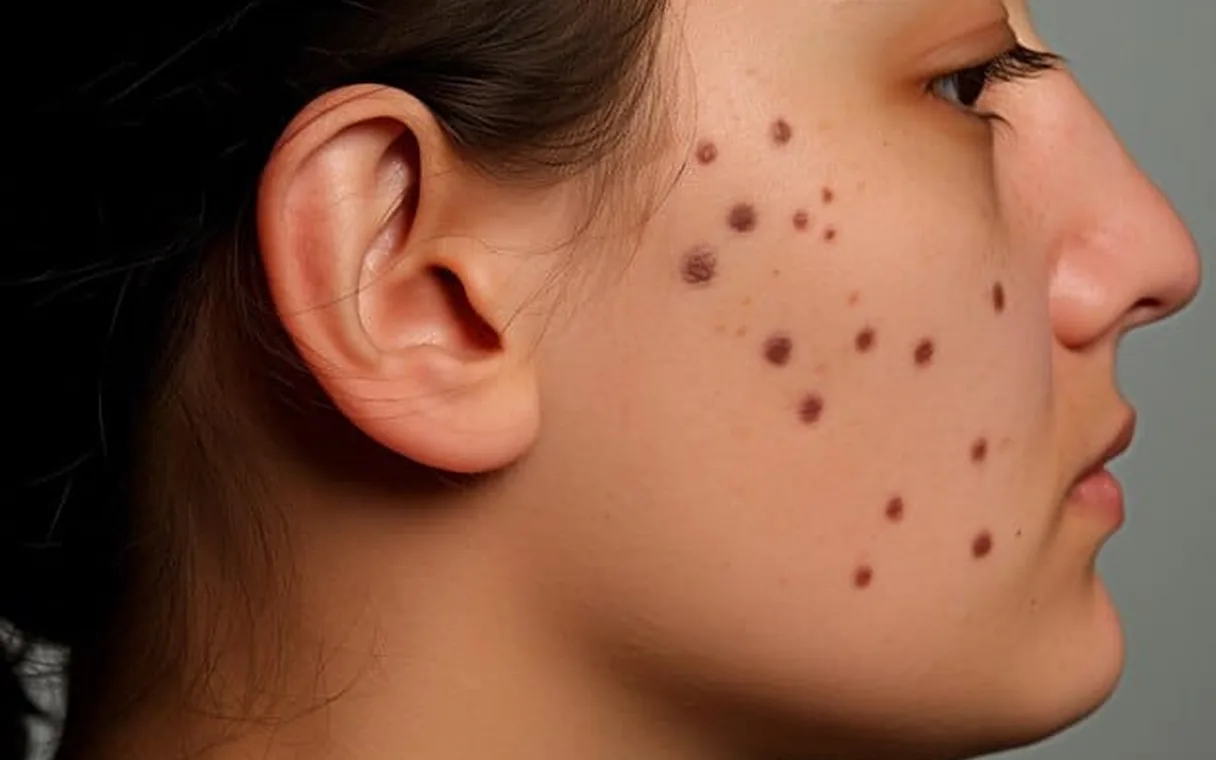
- Most black moles (kala til) are harmless clusters of pigment, but a changing one needs checking first.
- The safe removal methods are laser ablation, surgical excision, and radiofrequency, all doctor-led.
- At a registered clinic, removal starts at about PKR 5,000 per mole, often same day.
- Skip acid pens, removal creams, and parlour methods. They scar and can hide a serious change.
A dark mole on the face is one of the most common reasons people come to my clinic. Most are completely benign, and most can be removed cleanly in a single visit.
Before any of that, though, there is one safety step that matters more than the method you choose. This guide covers that check first, then the removal options that actually work.
Before removing any mole, it should be checked against the ABCDE rule (Asymmetry, Border, Colour, Diameter over 6 mm, Evolving), the American Academy of Dermatology's standard for spotting a mole that needs assessment. Source: American Academy of Dermatology.
What is a black mole, really?
A black mole, or kala til, is a cluster of pigment-producing cells that looks darker because of how much melanin it holds. The colour alone does not make it dangerous. Most are benign and have been there for years.
What matters is not the shade but whether it is changing. A stable dark mole is usually fine to remove for cosmetic reasons. A changing one needs to be assessed before anything else is decided.
Why do black moles appear on the face?
Black moles form when pigment cells grow in a small cluster instead of spreading evenly through the skin. Most are simply part of how your skin is made, and the face shows them more because it is the most visible area.
Three things make them more noticeable over time: family tendency, sun exposure, and hormonal change such as pregnancy. Sun is the one you can act on, so daily sunscreen is worth the habit, both for your skin and to keep existing moles stable [2].
Should you check a black mole before removing it?
Yes, always. Before removal, a mole should be checked against the ABCDE rule so that nothing suspicious is treated as merely cosmetic. Any mole that is changing, bleeding without injury, or not healing should be assessed in person, sometimes with a dermatoscope [3].
- A, Asymmetry. One half does not match the other.
- B, Border. Edges are uneven, scalloped, or blurred.
- C, Colour. More than one shade mixed together.
- D, Diameter. Larger than 6 mm, about a pencil eraser.
- E, Evolving. Changing in size, shape, or colour [1].
This check takes a minute and changes nothing about a healthy mole. For one that has been growing or changing, it is the difference between a cosmetic removal and catching something early.
Which removal methods actually work?
Three doctor-led methods remove a black mole safely, and the right one depends on the mole's size, depth, and whether it sits flat or raised. All are done under local numbing, so the procedure itself is comfortable.
Laser ablation (CO2 or Erbium)
A focused laser vaporises the mole layer by layer. It suits smaller, flatter facial moles and gives fine control over the final result.
Surgical excision
The mole is cut out and the skin closed, which allows the whole mole to be sent for testing. It suits larger or deeper moles where the full depth matters.
Radiofrequency ablation
Radio waves shave a raised mole down to the skin surface. It is quick and well suited to raised moles that sit above the skin.
Which methods should you avoid?
The methods that fill my clinic with avoidable scars and infections are the ones sold as quick fixes. Please do not use them on your face.
- Acid pens and online mole-removal creams, which burn the skin unevenly.
- Thread tying or cutting a mole off at home.
- Removal at a beauty parlour or salon, where the mole is never tested.
These also destroy the tissue a laboratory should have examined. If a mole has become sore or weepy, it may be infected, and an infection must be settled before removal [4]. Our guide on treating an infected mole explains what to do first, and for raised skin growths that are not moles, our skin tag removal guide may help.
What about scarring, and what does it cost?
An honest answer on scarring is that some mark is almost always left, but with the right method and aftercare it usually fades to a fine, flat line that most patients are happy with. Scarring is far worse when removal is rushed or done on inflamed skin.
At a registered clinic, removal of a black mole starts at about PKR 5,000 per mole and is often done the same day. For a full breakdown, see our guide to mole removal cost in Pakistan.
What happens on the day, and how long is recovery?
The area is cleaned and numbed, the mole is removed by the chosen method, and you go home the same day with simple aftercare. Most people return to normal activity straight away.
A small scab forms and settles over one to two weeks. Keep the area clean and out of strong sun, and avoid makeup over it until it has fully healed. Sun protection afterwards helps the new skin settle to an even colour.
How do you care for the skin afterwards?
Good aftercare is what turns a clean removal into a clean result. Keep the area dry for the first day, then clean it gently as advised and resist the urge to pick at the scab.
Stay out of direct sun and use sunscreen on the healing skin once the scab has gone, because new skin colours unevenly if it burns. Most marks keep fading for several weeks, so judge the final result at six to eight weeks rather than on day three. If the area becomes red, hot, or starts to weep, have it reviewed, as that can signal infection.
Black mole removal is a small, well understood procedure when it is done by a clinician on properly assessed skin. If you are weighing it up, the safest next step is a consultation, where the mole can be checked and the right method chosen. You can also browse the wider range of doctor-led skin treatments we offer across Islamabad and Rawalpindi.
Sources and references
- American Academy of Dermatology. Melanoma: know the ABCDEs. aad.org
- NHS. Moles. nhs.uk
- Skin Cancer Foundation. Melanoma warning signs. skincancer.org
- NHS. Cellulitis. nhs.uk
Common questions, answered by the doctor
Most are harmless clusters of pigment. The colour alone is not the worry. A mole that is changing, bleeding, or growing should be assessed before removal.
A properly removed mole does not usually grow back. If pigment was left behind, a small amount can return, which is one reason doctor-led removal matters.
Yes, several moles can often be removed together, and this usually lowers the cost per mole. Suitability is confirmed at the consultation.
The area is numbed with local anaesthetic, so the procedure itself is comfortable. There may be mild tenderness for a day or two afterwards.
Wait until the area has healed, usually one to two weeks, before applying makeup over it. Putting makeup on too early raises the risk of infection.
No. A parlour cannot assess the mole, work sterile, or send it for testing. Black mole removal should always be done by a clinician.
Speak to Dr Taskeen Iqbal
Message the clinic with your concern and a photo if you have one. Dr Taskeen Iqbal will tell you whether you need to come in, and what the right next step is.